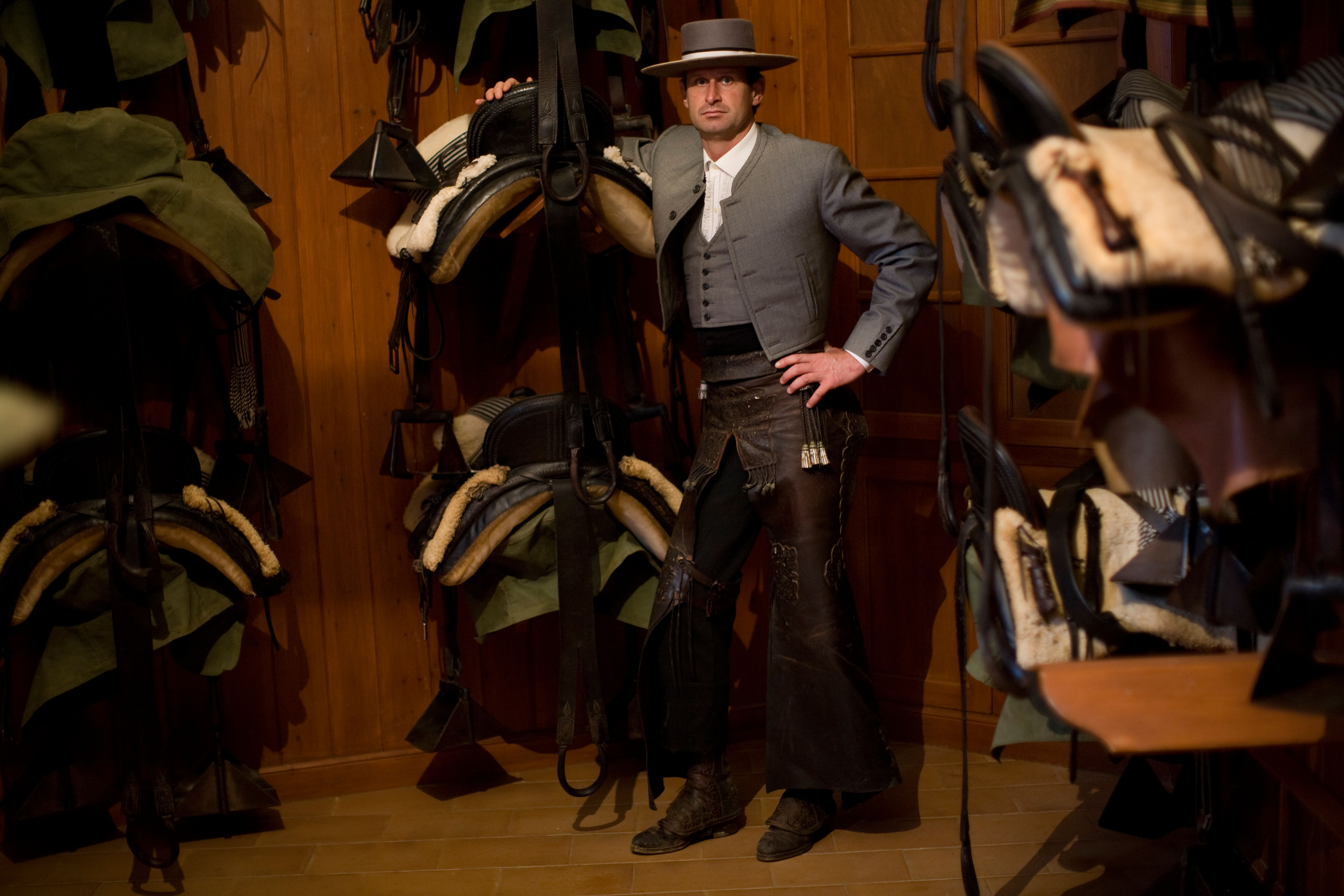
Tack Through Time: A Comprehensive Guide to the Spanish Saddle and Its Variants
The Spanish saddle is more than a riding tool — it is the physical embodiment of centuries of equestrian tradition, cultural identity, and practical refinement. From Moorish cavalry to modern dressage arenas, the Spanish saddle has evolved to meet the demands of war, ranching, pilgrimage, and pageantry. This guide explores its history, main saddle types, and lasting global influence.
Historical Context: Where It All Began
The earliest Spanish saddles emerged during the medieval period, heavily influenced by both Moorish and Christian riding traditions. Spain's rugged terrain and long history of horseback warfare necessitated a deep, supportive seat, high pommel and cantle, and long stirrups for security.
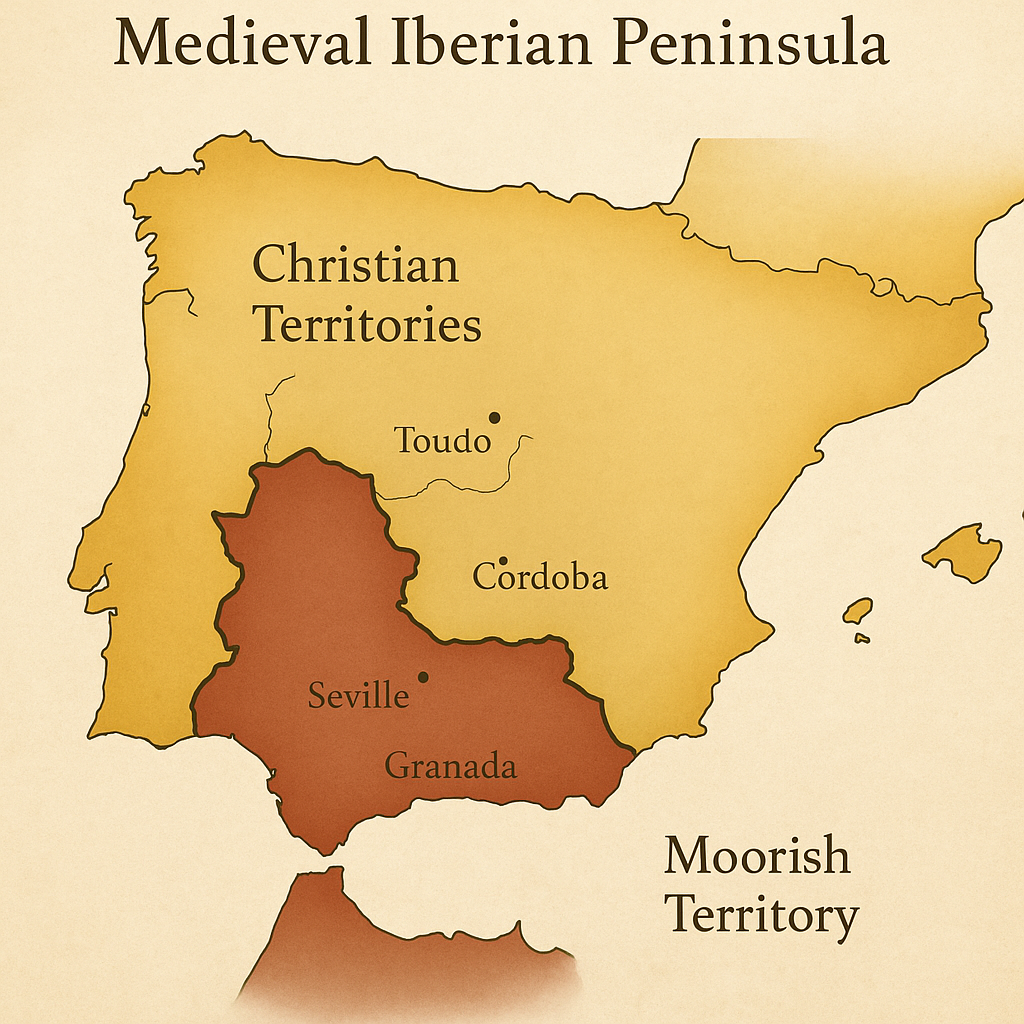
By the 15th century, as Spain expanded into the Americas, its saddle designs spread with it. These original Spanish saddles formed the basis for the charro saddle in Mexico and heavily influenced the Western saddle in the United States.
Despite this global diffusion, Spain retained and refined its original designs. In Andalusia especially, the saddle became closely tied to local riding disciplines, livestock work, and religious and cultural festivals.
Types of Spanish Saddles at a Glance
| Saddle Type | Primary Use | Key Characteristics |
|---|---|---|
| Silla Vaquera | Working saddle for cattle and herding | Deep seat, high cantle and pommel, long stirrups, leg flaps, sheepskin padding |
| Silla Española de Alta Escuela | Classical Spanish dressage | More refined seat, closer contact; used for piaffe, passage, and levade at the Royal School |
| Montura de Paseo | Parade and leisure riding | Highly decorative; elaborate tooling, embroidery, and silver accents; used at fairs and processions |
| Silla de Amazona | Female riders in traditional festivals and ceremonies | Asymmetrical seat; supports modesty and formal wear |
Main Types of Spanish Saddles
Each variant of the Spanish saddle reflects a distinct purpose — shaped by the terrain it was ridden over, the work it was used for, and the tradition it represented.
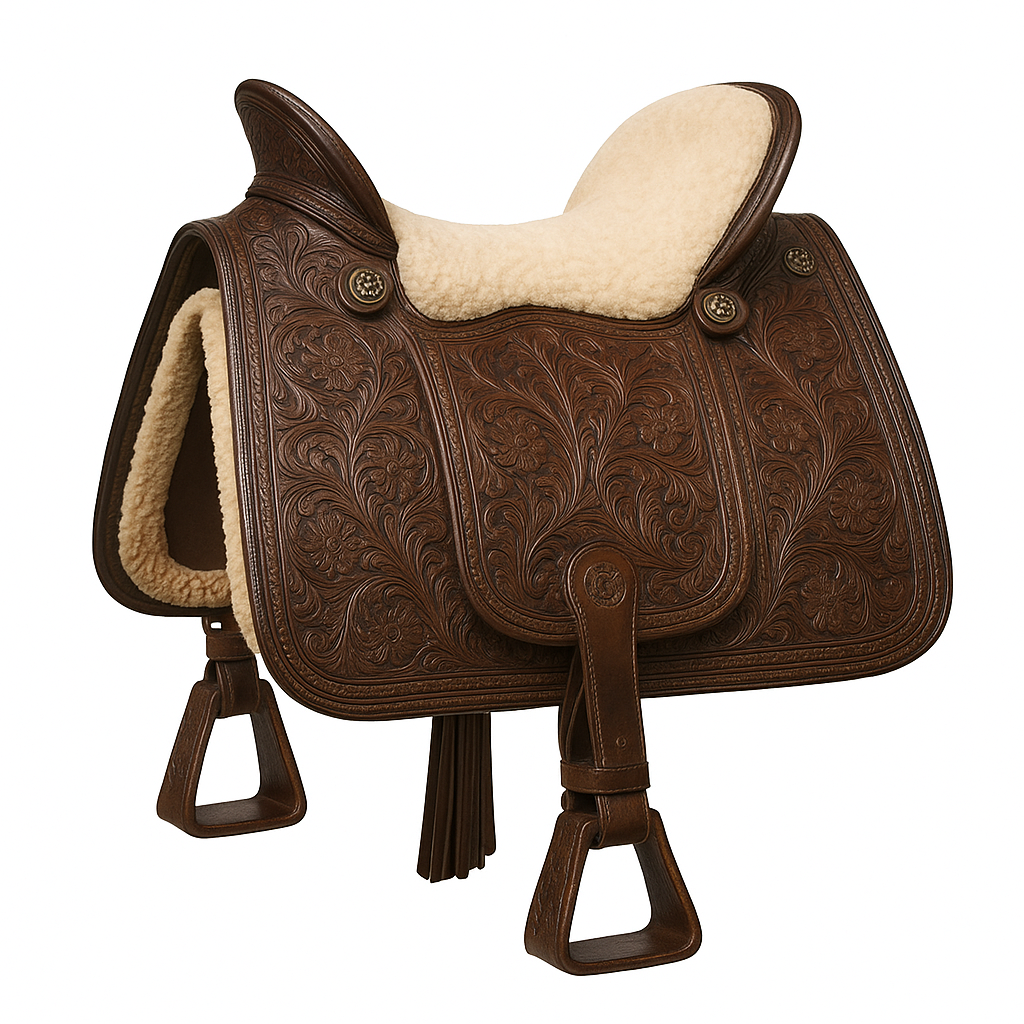
The Montura de Paseo is the most visually striking of the Spanish saddle variants. Built for fairs, religious processions, and public display, it functions as much as a cultural statement as a piece of tack. Elaborate silver fittings, hand-tooled leather, and embroidered textiles mark its use in events like the Feria de Abril in Seville, where horse and rider together become a living expression of Andalusian identity.
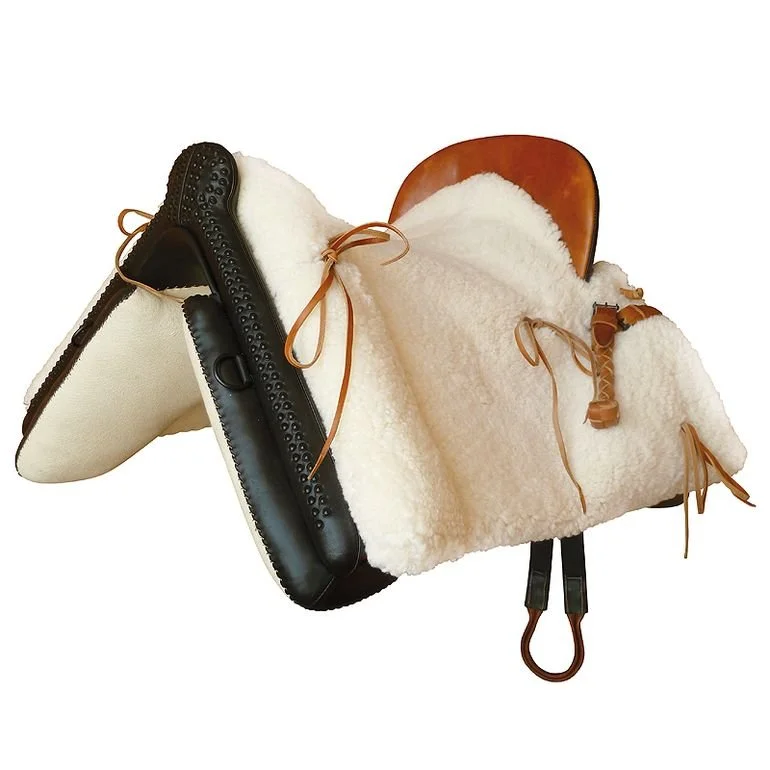
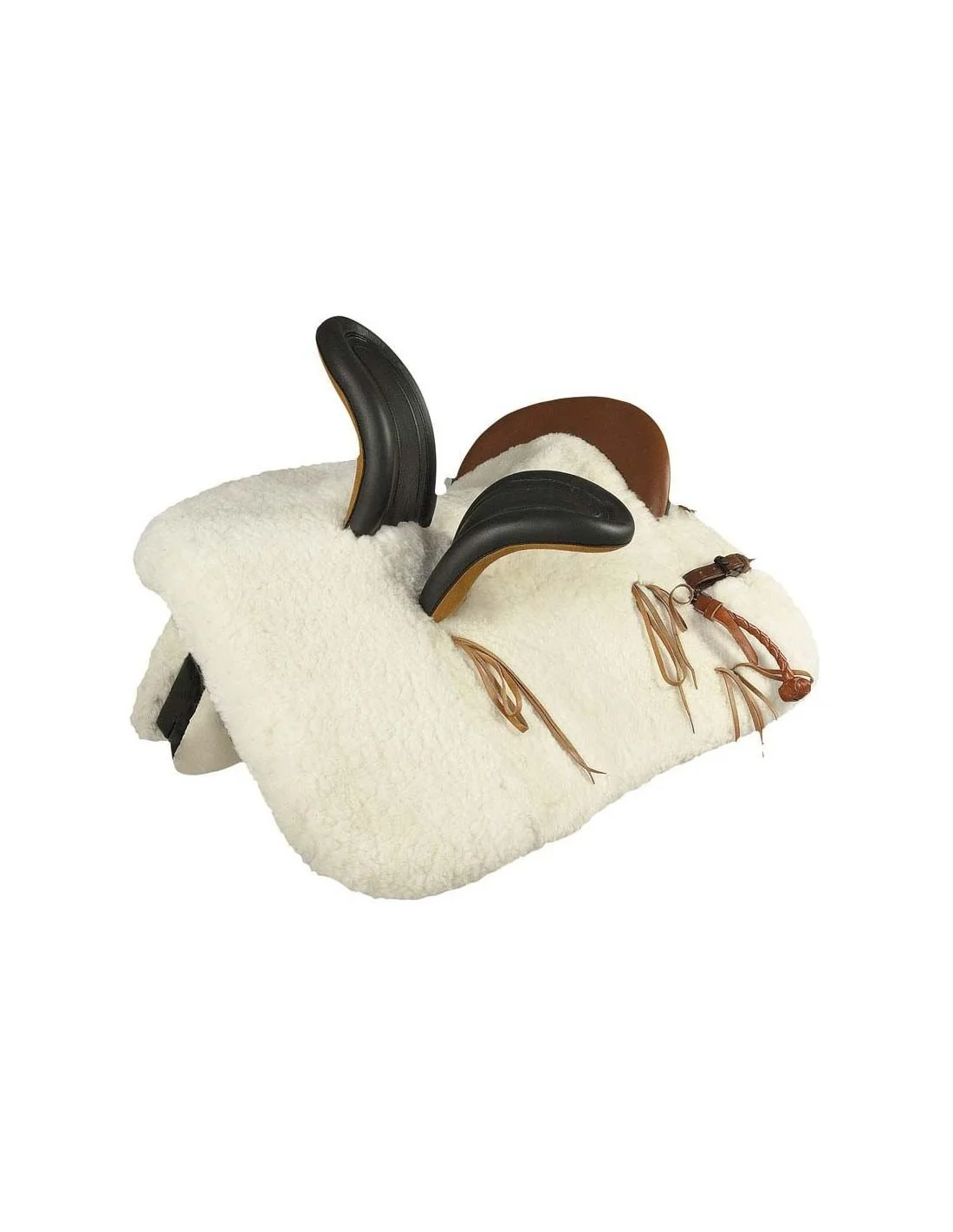
The Silla Vaquera is the functional counterpart. Used in doma vaquera — the traditional Iberian livestock-herding discipline — it prioritises stability and endurance over decoration. Its deep seat, high cantle, and flared leg flaps protect the rider during the rapid directional changes required when working cattle. The sheepskin padding, or borrego, absorbs the impact of long hours in the saddle, and the long stirrup position encourages the grounded leg typical of classical Iberian riding.
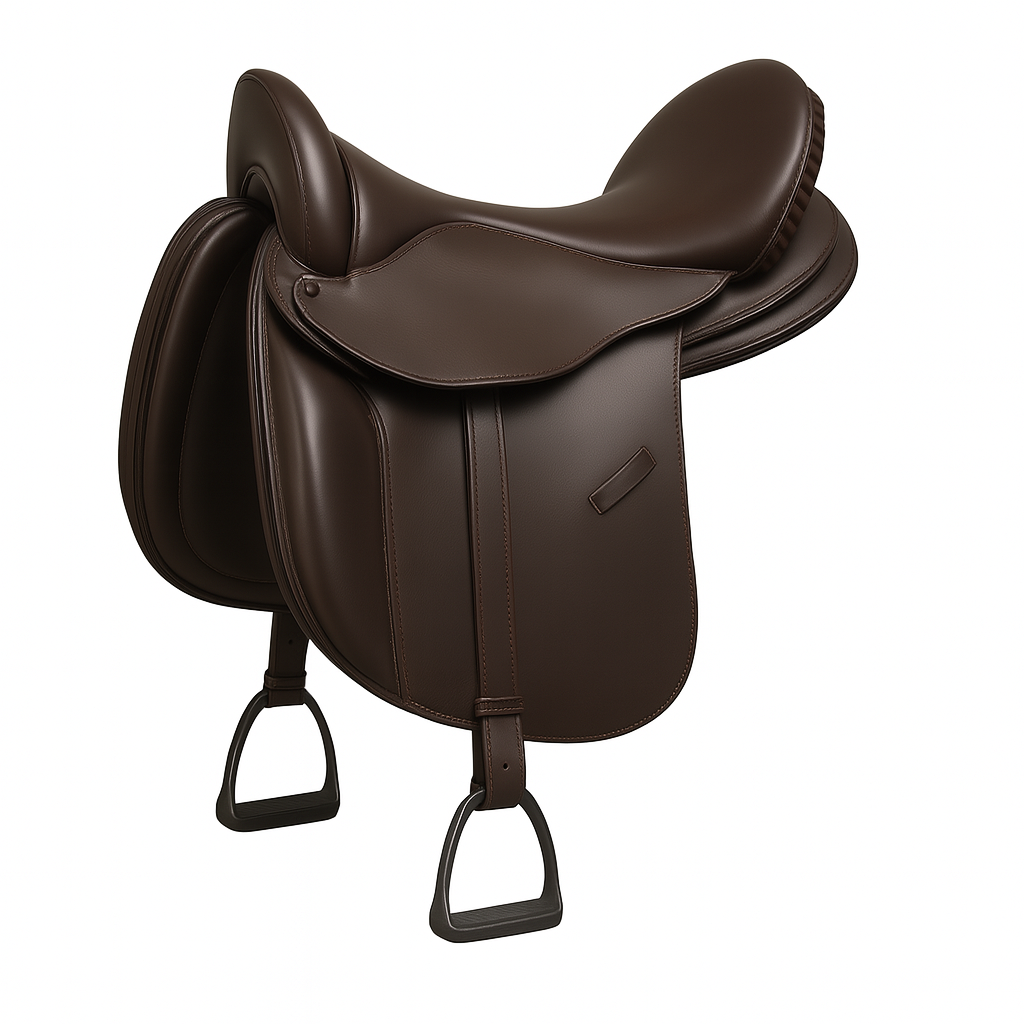
The Silla Española de Alta Escuela represents the pinnacle of technical refinement. Closer-contact than the working saddle and built for precision, it is associated with the classical movements of the Royal Andalusian School of Equestrian Art — including piaffe, passage, and the demanding airs above ground. Where the Vaquera is a tool of utility, the Alta Escuela is a tool of art.
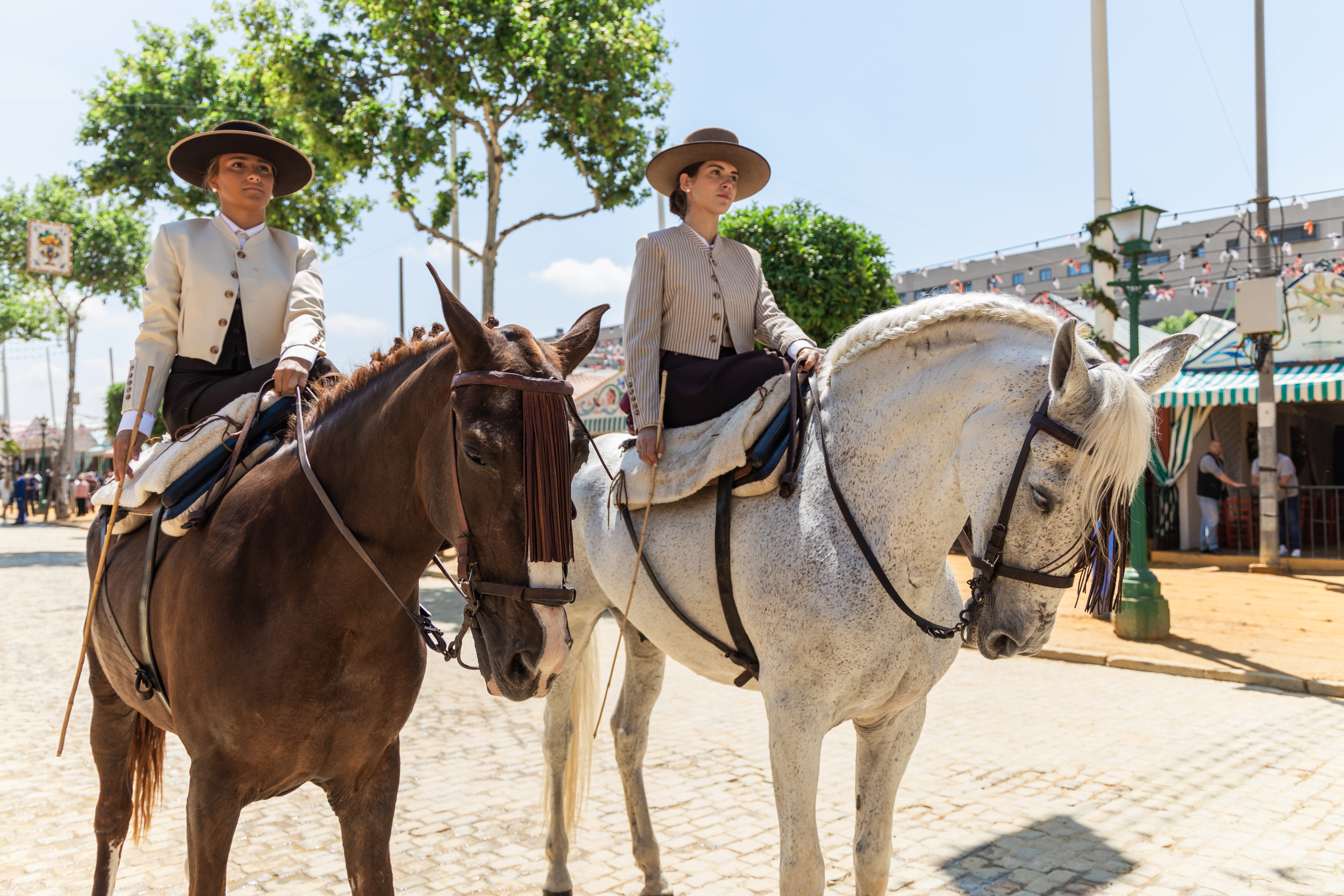
The Silla de Amazona is the Spanish interpretation of the side saddle. Unlike the English hunting variant, which was pushed toward athletic performance, the Amazona prioritised ceremony and display. It remains in use today at Andalusian fairs, where riders in traditional dress ride alongside their partners in a tradition with roots stretching back centuries.
Core Characteristics of Traditional Spanish Saddles
Across all variants, certain features define the Spanish saddle as a distinct tradition:
- Deep Seat: Provides balance and stability for collected movements or long rides.
- High Pommel and Cantle: Cradles the rider securely — ideal for stock work and classical dressage alike.
- Long Stirrup Leathers: Encourages a grounded, elongated leg position characteristic of Iberian riding styles.
- Flat or Lightly Padded Panels: Promotes close contact between horse and rider, preserving sensitivity.
- Sheepskin (Borrego) Padding: Common on working saddles, added for comfort on long days in the field.
"The Spanish saddle did not spread across continents by accident. It spread because it worked — for war, for cattle, and for the kind of riding that demanded a horse and rider to move as one."
A Global Legacy
As Spanish colonisation spread across the Americas from the 15th century onward, the saddle travelled with it. In Mexico, the design inspired the charro saddle — characterised by its prominent horn and richly tooled leather, and still central to the traditions of charreería today. In the United States, these same forms evolved into the Western saddle, the foundation of cowboy culture and the most widely used saddle type in the world today.
Despite its international reach, the original Spanish saddle remains largely unchanged in Andalusia. The Silla Vaquera used in modern doma vaquera competitions shares its essential geometry with saddles that were in use four centuries ago. That continuity is not resistance to change — it is proof that the design worked, and that the culture it built was strong enough to preserve it.
Related Stories
The Side Saddle: An Evolution Shaped by Constraint, Craft, and Culture
The side saddle was not a decorative tradition but a technical response to social constraint. This article traces its evolution from medieval Europe to its peak in British fox hunting.
Escaramuza: Women, Horses, and Tradition in Mexico's Arena
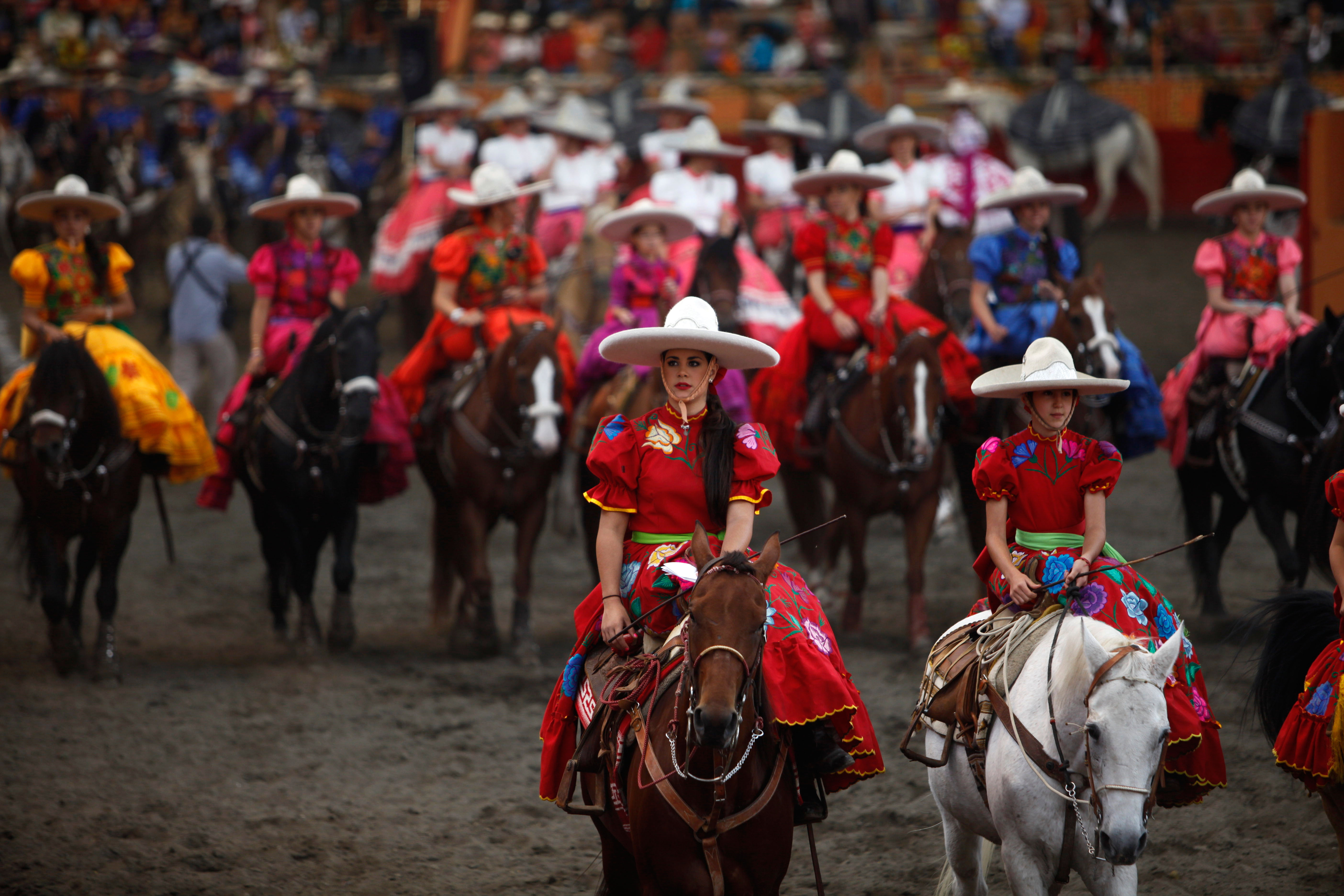
Set to music and performed at full gallop, Escaramuza brings eight riders into the arena as a single unit. Riding sidesaddle, they move through crossing lines and sweeping turns with precision and control.
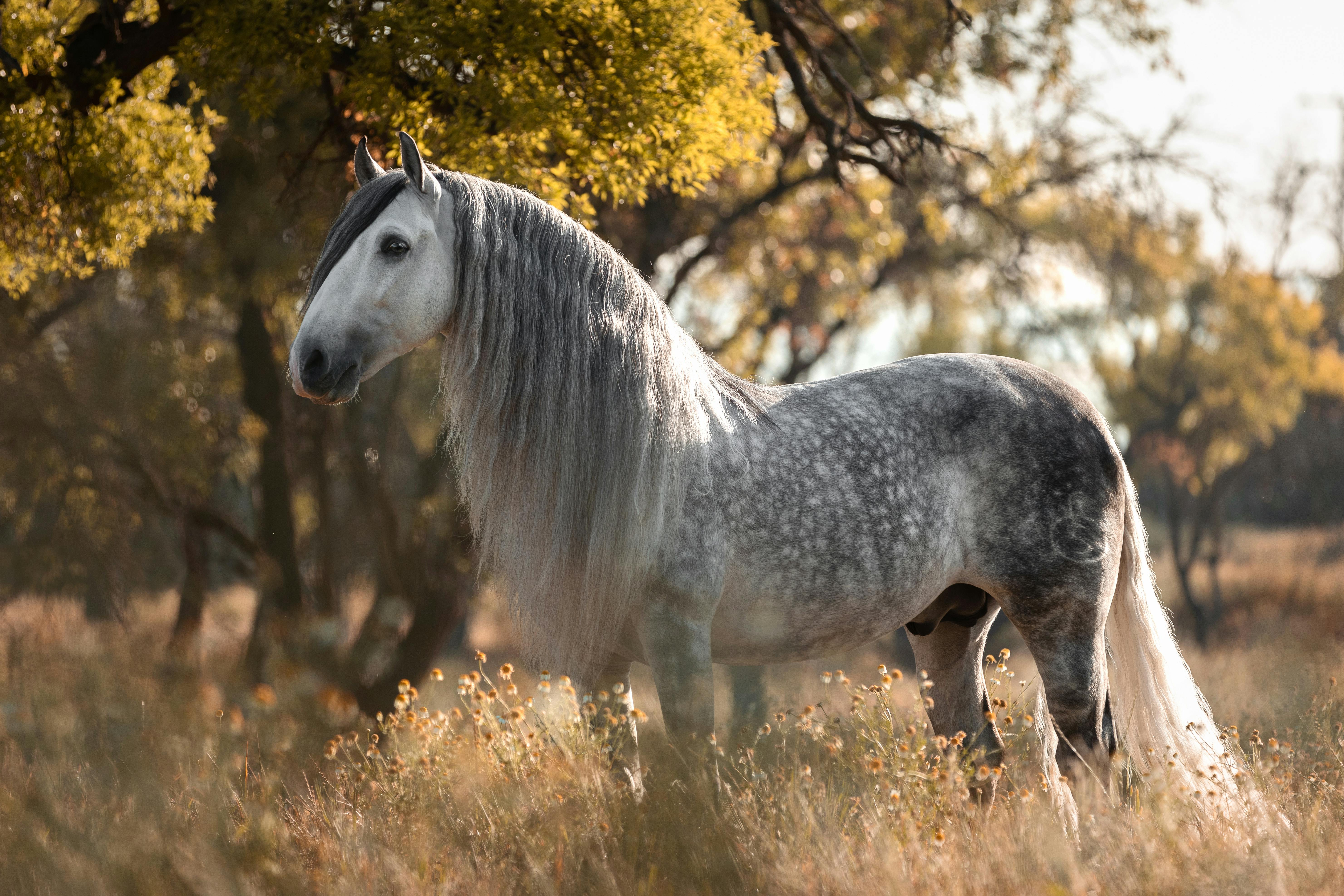
The Andalusian: Spain's Horse of Kings
Few breeds are as deeply linked to a culture as the Andalusian is to Spain. From the battlefields of the Reconquista to the dressage arenas of the modern world, this is the horse that wore the Spanish saddle.